
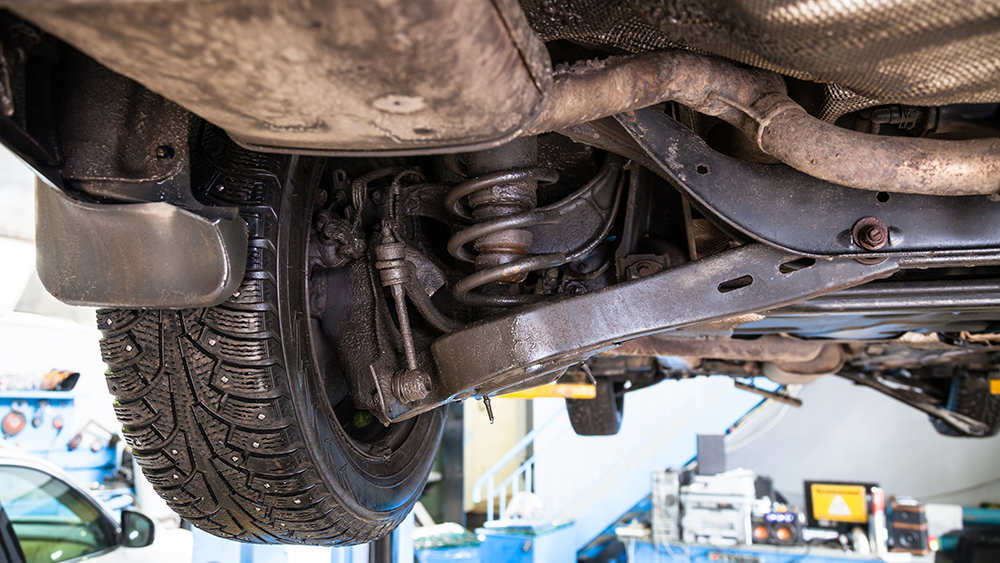
Your exhaust does more than quieten the engine. It carries dangerous gases away from the cabin, helps the engine breathe, and keeps emissions in check. When it starts to fail, the signs are usually easy to notice — if you know what to listen and watch for.
The clearest signs of an exhaust problem are a louder or throatier engine note, a rattle or hiss underneath, a drop in power or fuel economy, and unusual smells inside the car. Catch these early and a small repair sorts it. Leave them and you risk a bigger bill — or fumes getting into the cabin. Bega Valley’s rough rural roads and coastal air are both hard on exhaust systems, so it pays to stay alert.
What your exhaust system does
From the engine back, the exhaust collects gases at the manifold, cleans them through the catalytic converter, quietens them in the muffler and carries them safely out the back. Along the way it also helps the engine run efficiently. Every part of that system sits under the car, exposed to heat, water, salt and stones — which is exactly why exhausts wear out.
Warning signs to watch for
- A louder or different engine note: A sudden increase in noise, or a deeper throaty tone, often means a leak or a blown section.
- Rattles or hissing underneath: A rattle over bumps can be a loose heat shield or bracket; a hiss or tapping often signals a leak in a pipe or joint.
- A drop in power or economy: A blocked or damaged exhaust makes the engine work harder, so you feel it in performance and at the bowser.
- Smells inside the car: Any exhaust smell in the cabin needs immediate attention — never ignore it, as exhaust gases are dangerous to breathe.
- Visible rust or holes: Surface rust is common, but flaking, holes or hanging sections mean it’s time for repair.
Why country roads are hard on exhausts
Corrugations and potholes shake brackets loose and crack joints over time. Water crossings and coastal salt speed up rust. And a low-hanging pipe can cop a hit from a rock or a rut on an unsealed road. None of this is unusual around here — it just means it’s worth a quick look under the car now and then, especially after a rough trip.
Repair or replace?
It depends on where the problem is. A single rusted section, a blown gasket or a loose bracket is often a straightforward repair. A failed catalytic converter or widespread rust through multiple sections may mean replacing more of the system. Either way, sorting a small leak early usually stops it turning into a bigger, dearer job — and keeps the cabin safe.
The catalytic converter — and why it’s worth protecting
One part of your exhaust is worth singling out: the catalytic converter. It cleans harmful gases before they leave the tailpipe, and it’s both essential for passing an emissions check and one of the more expensive exhaust parts to replace. Looking after it saves you real money down the track.
A few things kill a converter early — running the engine with a misfire (unburnt fuel overheats it), using the wrong fuel, or ignoring engine faults that make it work overtime. In short, it’s expensive to replace and easy to damage through neglect, so treating engine warning lights and misfires promptly is the cheapest insurance you can give it.
Repair or replace: what to expect
Not every exhaust problem means a whole new system. The right fix depends on what’s failed and where.
- Small leaks: Often repairable by replacing the affected section or joint.
- Loose or rattling parts: Brackets, hangers and heat shields are usually a quick, cheap fix.
- Widespread rust: If several sections have rusted through, replacing the run is often more cost-effective than patching it piece by piece.
Whatever the fix, sorting it early keeps the cabin safe and stops a small leak turning into a bigger, dearer job.
Frequently asked questions
Is it safe to drive with an exhaust leak?
It’s risky and worth fixing quickly. A leak can let dangerous exhaust gases near or into the cabin, and it can also fail a safety inspection (pink slip). If you smell exhaust inside the car, stop driving it until it’s repaired.
Why is my car suddenly louder?
A sudden increase in exhaust noise usually means a leak, a blown section or a failed muffler. It’s a common sign that part of the exhaust has rusted through or come loose — get it checked before it worsens.
How long do exhaust systems last?
It varies widely with the vehicle and conditions — rust, rough roads and coastal salt all shorten an exhaust’s life. Many systems last many years, but country and coastal driving can wear them faster, so inspect yours periodically.
Why does my exhaust smell like rotten eggs?
A sulphur or rotten-egg smell usually points to a problem with the catalytic converter or an engine running too rich. It’s worth a diagnostic check, because ignoring it can lead to a failed — and costly — converter.
Can I drive with a hole in my exhaust?
You shouldn’t for long. A hole makes the car louder, can fail a safety inspection, and — most importantly — can let dangerous exhaust gases near or into the cabin. Get even a small hole repaired quickly rather than letting it grow.
Is a loud exhaust always a problem?
Usually, yes — if the noise has increased on its own. A sudden rise in volume points to a leak or a blown section rather than a performance upgrade. It’s worth having it checked so a small leak doesn’t turn into a bigger job.
Get in touch
Hearing something you’re not sure about underneath? Talk to Parts4 Bega — call (02) 6492 5212 or drop into 115 Gipps Street, Bega, and we’ll help you find the exhaust parts you need. See our Exhaust range online.