
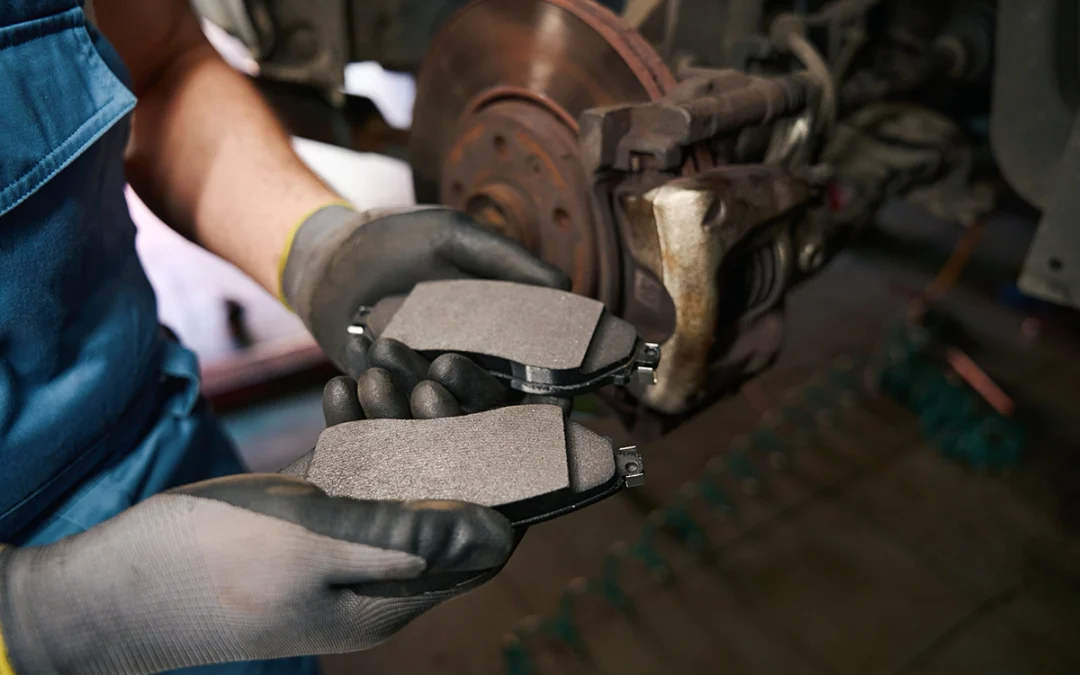
If your car takes longer to stop than it used to, or you hear a squeal every time you touch the pedal, your brake pads are probably trying to tell you something. Worn brake pads are one of the most common – and most dangerous – problems we see across the counter, and the good news is they’re easy to catch early once you know the signs.
Here’s the short answer: replace your brake pads when they’re worn to around 3mm or less, when you hear consistent squealing or grinding, or when a brake warning light comes on.
Below we walk through the six warning signs, so you can sort your brakes before a small job turns into an expensive one. Rough country roads and the stop-start driving around Bega wear pads faster than most people expect.
How brake pads wear (and why it matters)
Every time you brake, the pads clamp against the disc rotors and turn your car’s momentum into heat. That friction is exactly what stops you – and it slowly wears the pad material down. Once the friction material gets too thin, braking distances grow, the rotors can get damaged, and stopping safely gets harder. Catching worn pads early keeps you safe and usually saves your rotors, which are far more expensive to replace than pads.
The 6 warning signs your brake pads need replacing
- Squealing or screeching: Most pads have a small metal wear indicator that scrapes the rotor and squeals when the pad gets low. If you hear a squeal that goes away when you brake, book it in.
- Grinding: A harsh metal-on-metal grind usually means the pad is gone and the backing plate is chewing into the rotor. Stop driving on it – this damages rotors fast and cuts your stopping power.
- Longer stopping distances: If the car feels like it needs more road to pull up, worn pads are a prime suspect. Don’t wait for it to get worse.
- Vibration through the pedal: A pulsing or shuddering brake pedal often points to worn pads or warped rotors, especially after heavy braking on long descents.
- A brake warning light: Many modern cars have brake wear sensors. If the light comes on, get the pads checked straight away.
- Pulling to one side: If the car tugs left or right under braking, the pads may be wearing unevenly – a sign of a sticking caliper or other issue worth inspecting.
When to replace vs when to inspect
As a rule of thumb, new pads start around 10-12mm of friction material and should be replaced by the time they reach 3mm. You don’t need to guess – a quick visual check through the wheel spokes, or a look during your next tyre rotation, tells you plenty.
Replace pads in axle sets (both wheels on the same axle) so braking stays even. If the rotors are scored, grooved or below their minimum thickness, replace or machine them at the same time – new pads on damaged rotors won’t last.

Choosing the right brake pads for your vehicle
The best pad depends on how you drive. A daily runabout, a loaded work ute and a towing 4×4 all ask different things of their brakes.
- Everyday driving: Quality standard pads give quiet, reliable stopping for normal around-town use.
- Towing and 4×4: Heavy-duty pads handle the extra load and heat of towing and off-road work without fading.
- Performance: Upgraded pads suit spirited driving, but match them to the right rotors for the best result.
You can check out our Brake Products page to view our range of brands available for pads, rotors, and full brake kits.
Frequently asked questions
How long do brake pads last?
It depends on the pad, the vehicle and how you drive, but many pads last somewhere between 30,000 and 70,000 km.
Towing, heavy loads and lots of stop-start driving wear them faster, so treat the warning signs – not the odometer – as your guide.
Can I replace just one brake pad?
No. Always replace pads as an axle set so both sides brake evenly. Replacing a single pad can make the car pull under braking and is unsafe.
Do I need to replace the rotors too?
Not always. If the rotors are still within spec and not scored or warped, new pads are enough.
If they’re grooved or too thin, replace or machine them at the same time so the new pads seat properly.
Why do my brakes squeal in the morning but stop later?
A light squeal on the first few stops of the day is often just surface rust or overnight moisture on the rotors, and it clears once the brakes warm up.
A squeal that stays, or gets worse, usually means the wear indicators are touching the rotor – get the pads checked.
Can worn brake pads damage my rotors?
Yes. Once the pad material wears through, the metal backing grinds into the rotor and scores it.
That’s exactly why replacing pads early usually saves your rotors, which are much more expensive to replace than the pads themselves.
Get in touch
Not sure how much life is left in your brakes?
Drop into Parts4 Bega at 115 Gipps Street or call us on (02) 6492 5212 – our parts interpreters will help you pick the right brake pads for your vehicle.
Browse our full range on the Brakes page.